
So, do I need a bonded retainer with braces? For many families, the answer is yes, especially when keeping the front teeth straight matters most. A bonded retainer is a thin wire fixed behind your teeth that quietly holds your new smile in place 24/7, no daily wear required.
Your retainer plan depends on your bite, your habits, and your orthodontist’s recommendation. Let’s walk through how bonded retainers work, how they compare to removable options, and how to know if one is right for you.
What Is a Bonded Retainer?
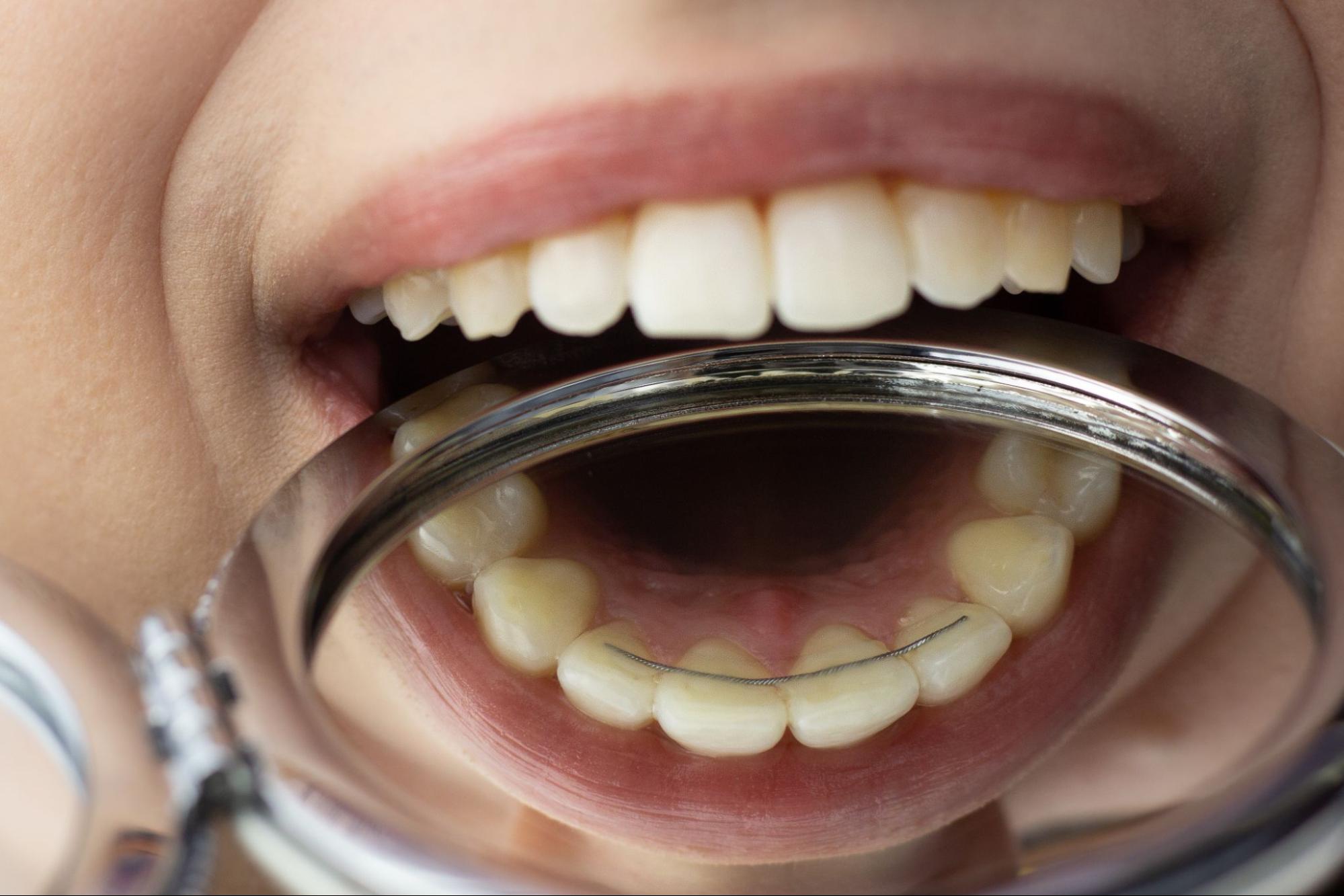
A bonded retainer is a thin, custom-shaped wire permanently fixed to the back of your front teeth after braces come off. Also called a permanent, fixed, or lingual retainer, it stays in place 24/7 with no removal needed. It usually attaches to 4–6 lower or upper front teeth to hold your corrected smile long-term.
Because it sits behind your teeth, no one can see it when you talk, laugh, or pose for photos. That’s a big perk for teens and adults who want their finished smile to look natural from day one.
A few things make a bonded retainer stand out:
- Always on the job. It works around the clock without you lifting a finger.
- Hidden from view. The wire sits on the tongue-side of your teeth.
- Long-term hold. It’s designed to keep front teeth from drifting back to old positions.
- Low effort. No case to pack, no reminder to wear it after dinner.
Your orthodontist may recommend a bonded retainer when keeping the lower front teeth straight is the top priority, since that arch tends to shift first once braces come off.

How Does a Bonded Retainer Work?
A bonded retainer works by anchoring a small wire to the back of your teeth with dental composite, the same tooth-colored material used for fillings. Once placed, the wire gently holds each tooth against the natural shifting that happens after braces come off. Placement is quick, comfortable, and usually wraps up in just a few minutes.
The basic process looks like this:
- Custom shaping. Your orthodontist shapes a thin wire to match the curve of your teeth.
- Tooth prep. The back surfaces of the front teeth are gently cleaned and prepped.
- Bonding. Small dots of dental composite secure the wire to each tooth, usually the front 6 lower teeth, and sometimes the upper teeth too.
- Cure and polish. A quick light cures the composite, and the bond is smoothed for comfort.
After placement, daily care matters. You’ll want to clean carefully under the wire using a floss threader, super floss, or a water flosser. This keeps plaque from building up around the brackets and protects your gums for the long haul.
Benefits of a Bonded Retainer
Bonded retainers offer some real perks, especially for families juggling busy schedules. They work hard in the background so you don’t have to think about wearing them every night.
Why Are Bonded Retainers So Convenient?
The biggest draw is how little they ask of you. There’s nothing to remember and nothing to lose, which makes them a favorite for households that already have plenty to track.
- 24/7 protection. You never have to remember to put a retainer in.
- Invisible up front. Because the wire sits behind your teeth, your smile looks completely natural.
- No more lost retainers. You can’t toss it in a napkin or leave it behind at a sleepover.
Who Benefits Most from a Bonded Retainer?
Some smiles need extra help staying put, and bonded retainers shine in those cases.
- Strong relapse prevention. They’re excellent at holding front teeth steady after braces.
- Teen-friendly. Great for kids who tend to misplace appliances or forget routines.
For families who want peace of mind that their new smile stays put, a bonded retainer is often a smart pick. It’s one of the simplest ways to protect the time and care invested in braces.
Bonded Retainer vs. Removable Retainer (Vivera & Hawley)
Choosing between a bonded retainer and a removable option like Vivera or Hawley comes down to your lifestyle and habits. Both keep your smile straight, but they work in different ways.
Take a side-by-side look:
| Feature | Bonded Retainer | Vivera (Clear) | Hawley (Wire & Acrylic) |
|---|---|---|---|
| Wear time | 24/7, fixed in place | Removable, worn as directed | Removable, worn on a set schedule |
| Visibility | Invisible (behind teeth) | Nearly invisible | Visible wire across front |
| Cleaning | Requires floss threader or water flosser | Easy, removes for brushing | Easy, removes for brushing |
| Risk of loss | None | Can be misplaced | Can be misplaced |
| Durability | Wire can occasionally pop loose | Replaceable in sets | Long-lasting acrylic and wire |
| Compliance needed | None | High | High |
A few things to keep in mind:
- Removable retainers make brushing and flossing easier, but they only work if you actually wear them.
- Bonded retainers handle compliance for you, though they need extra cleaning attention.
- Vivera retainers are nearly invisible and come in sets, so a backup is always ready.
- Hawley retainers are sturdy and adjustable, a classic option that lasts.
Many orthodontists suggest a combo plan: a bonded retainer on the lower arch plus a removable retainer for the upper. You get low-effort protection on the bottom and easy cleaning up top. During your visit, your orthodontist can match you with the retainer setup that fits your smile and your routine.
Do You Need a Bonded Retainer? Candidacy Factors
Not every smile needs a bonded retainer, but for some families, it’s the right fit. Your orthodontist looks at your bite, how much your teeth moved, and your daily habits to decide what works best.
You may be a strong candidate if:
- Your front teeth had significant crowding or gaps that were corrected during braces.
- You’re at higher risk of relapse based on your original bite or tooth position.
- You’ve struggled with removable retainers in the past or forget to wear them consistently.
- You’re a busy teen or adult who wants a “set it and forget it” solution.
- You have good hygiene habits and can keep up with careful flossing.
The Ovation Orthodontics team reviews your finished smile, talks through your routine, and recommends the option most likely to keep your teeth straight for years to come. A good orthodontist weighs both the science and your day-to-day life before settling on a plan.
Frequently Asked Questions About Bonded Retainers
The Ovation Orthodontics team hears these questions often, so here are clear answers to the ones that come up most.
How long do you need to wear a bonded retainer?
Most bonded retainers stay in place for years, and many people keep theirs indefinitely. Teeth naturally want to shift throughout life, so long-term retention is the best way to protect your smile. Your orthodontist will check the wire at each visit and let you know if anything ever needs adjusting.
Are bonded retainers permanent?
They’re considered semi-permanent. A bonded retainer stays attached until an orthodontist decides to remove it, often after many years of successful use. As long as the wire stays intact and your gums stay healthy, there’s usually no rush to take it out.
How many teeth do bonded retainers hold?
A bonded retainer typically holds the front 4 to 6 teeth, most often on the lower arch. Sometimes it’s placed on the upper arch too, depending on your bite. The wire follows the natural curve of your teeth, keeping each one in its corrected spot.
Can you eat normally with a bonded retainer?
Yes, you can eat most foods normally. Just be cautious with very hard or sticky items like ice, hard candy, or chewy caramels, which can pop the wire loose. Cutting tougher foods into smaller pieces is a smart habit to build early.
Do bonded retainers affect speech?
Most people adjust within a day or two. You might notice the wire briefly when your tongue explores the new spot, but speech changes are rarely noticeable to others. Practice talking and reading aloud, and any minor lisp usually fades fast.
How do you clean a bonded retainer?
Daily cleaning is key. Use a floss threader, super floss, or a water flosser to clean under the wire and between teeth. Brush twice a day, and keep up with regular dental cleanings to protect your gums and the bond itself.